Together, we can

Defend human dignity, protect equal rights, and build a more just world

Equal Rights Foundation Gh (ERF Gh) works with communities, young people, and institutions to defend constitutional freedoms and protect every person's dignity — through advocacy, education, legal support, and civic dialogue.

Support us
Diverse group in a community discussion
On record since

Est. 2019

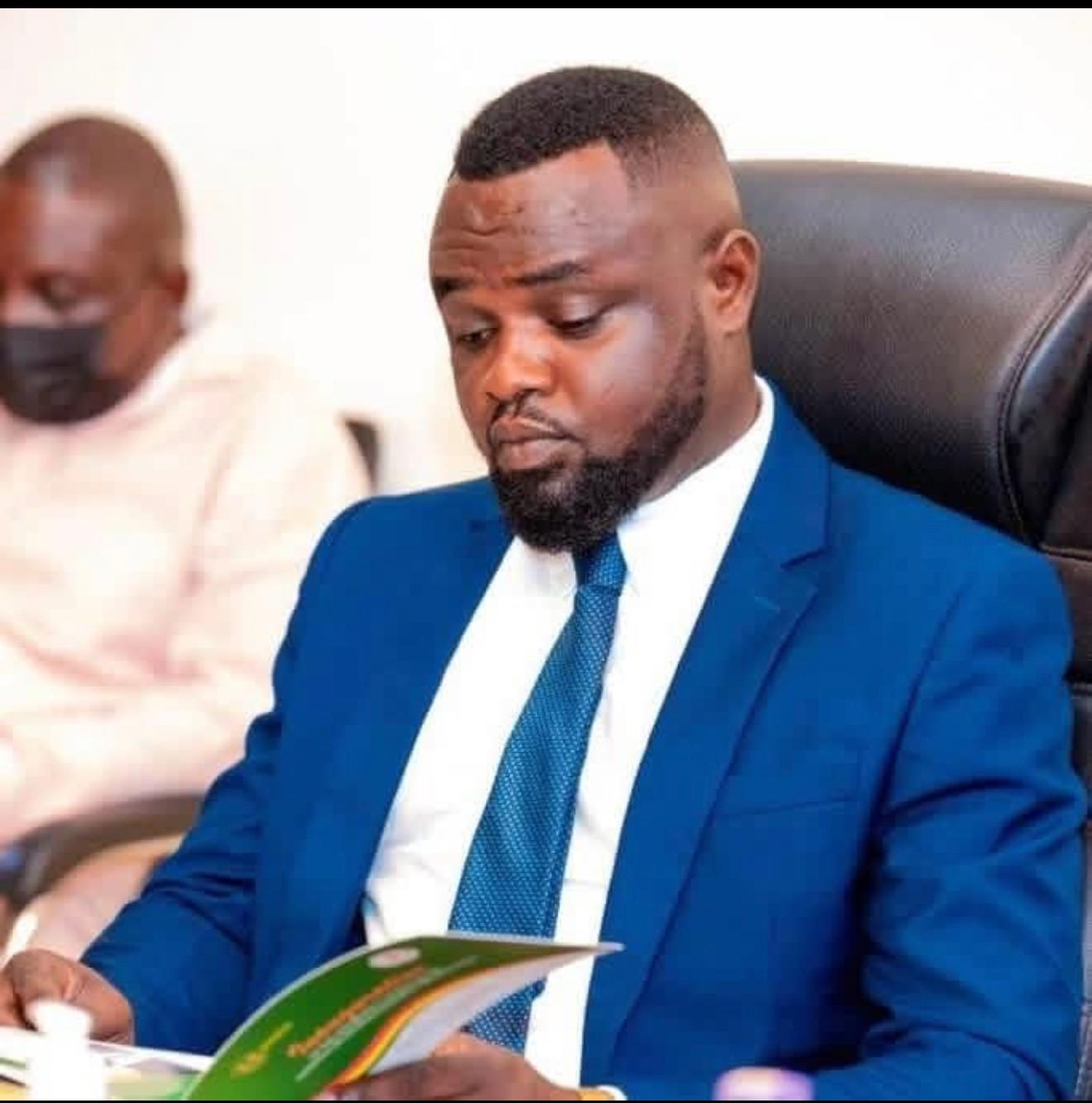
Portrait of LGBTQ+ Rights Ghana executive director
Danny Bediako
Executive Director, Equal Rights Foundation Gh (ERF Gh)
A message from our director

"Equal Rights Foundation Gh (ERF Gh) exists because too many people face abuse and discrimination with nowhere safe to turn."

Human rights are not privileges for a few — they are protections owed to everyone. We work alongside communities, local institutions, and volunteers to make that protection real and reachable, from the first report of abuse through to justice and follow-up care.

Every case that reaches us represents a person who chose to speak up. Our job is to make sure that choice is met with dignity, not silence.

Read more

A registry of our impact

These figures reflect our ongoing work promoting human rights, protecting dignity, and building just, inclusive communities.

Reach
0+
People reached through outreach and campaigns
Casework
0+
Individuals connected to legal support
Education
0+
Civic education sessions delivered
Dialogue
0+
Community dialogues convened
What We Do

Four ways we defend dignity

We work with individuals, communities, youth groups, and institutions to promote constitutional freedoms, protect vulnerable people, and build a society rooted in respect, equality, and inclusion.

01 / Focus

Advocacy

We advocate for constitutional freedoms and the protection of vulnerable people through awareness campaigns, policy engagement, and community action.

02 / Focus

Education

We educate communities and young people on human rights, civic responsibility, justice, and peaceful coexistence.

03 / Focus

Legal Support

We guide and connect people facing discrimination, abuse, or rights violations with legal support and protection.

04 / Focus

Civic Dialogue

We encourage open conversation and inclusive dialogue that strengthens unity, understanding, and social justice.

Update — May 29, 2026

The anti-LGBT+ bill is back in Ghana — now with stronger political support

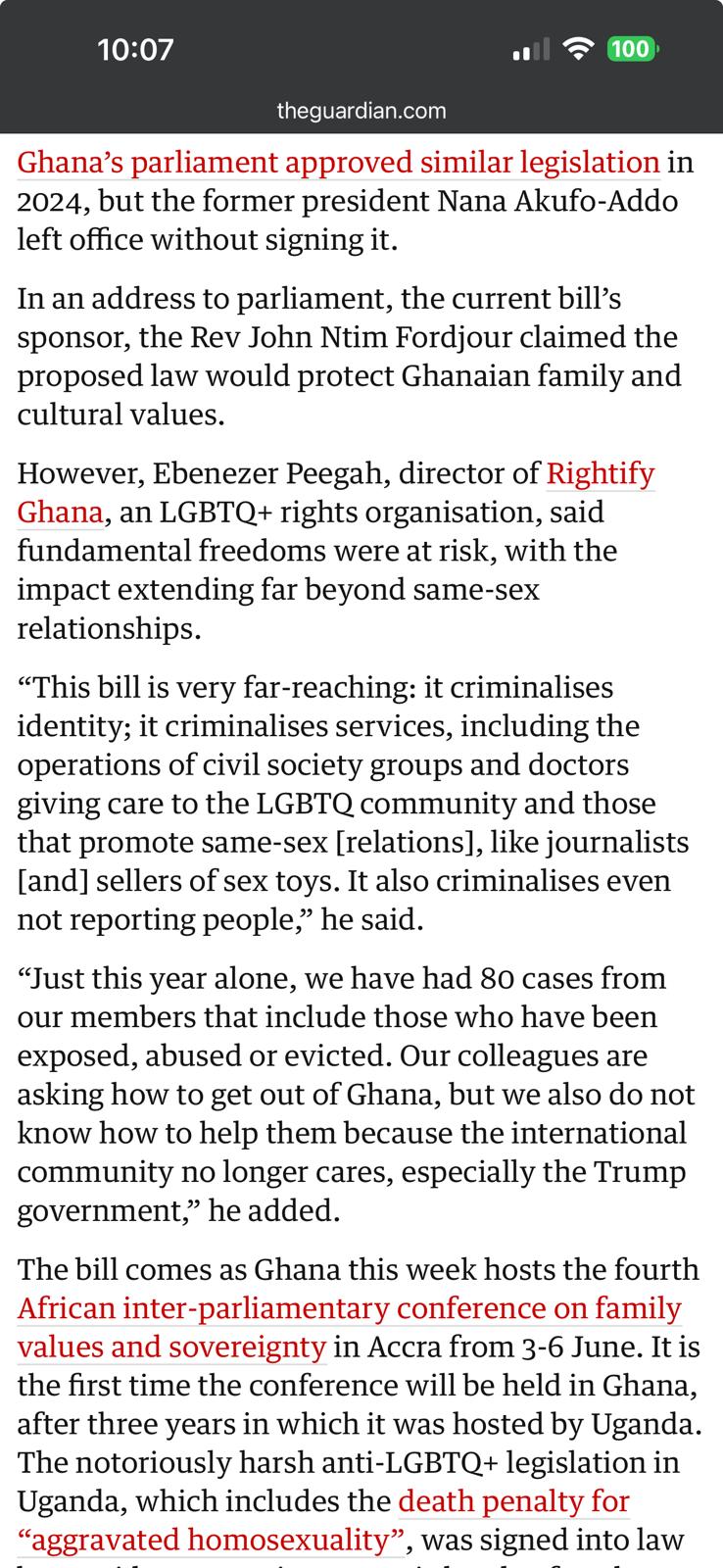
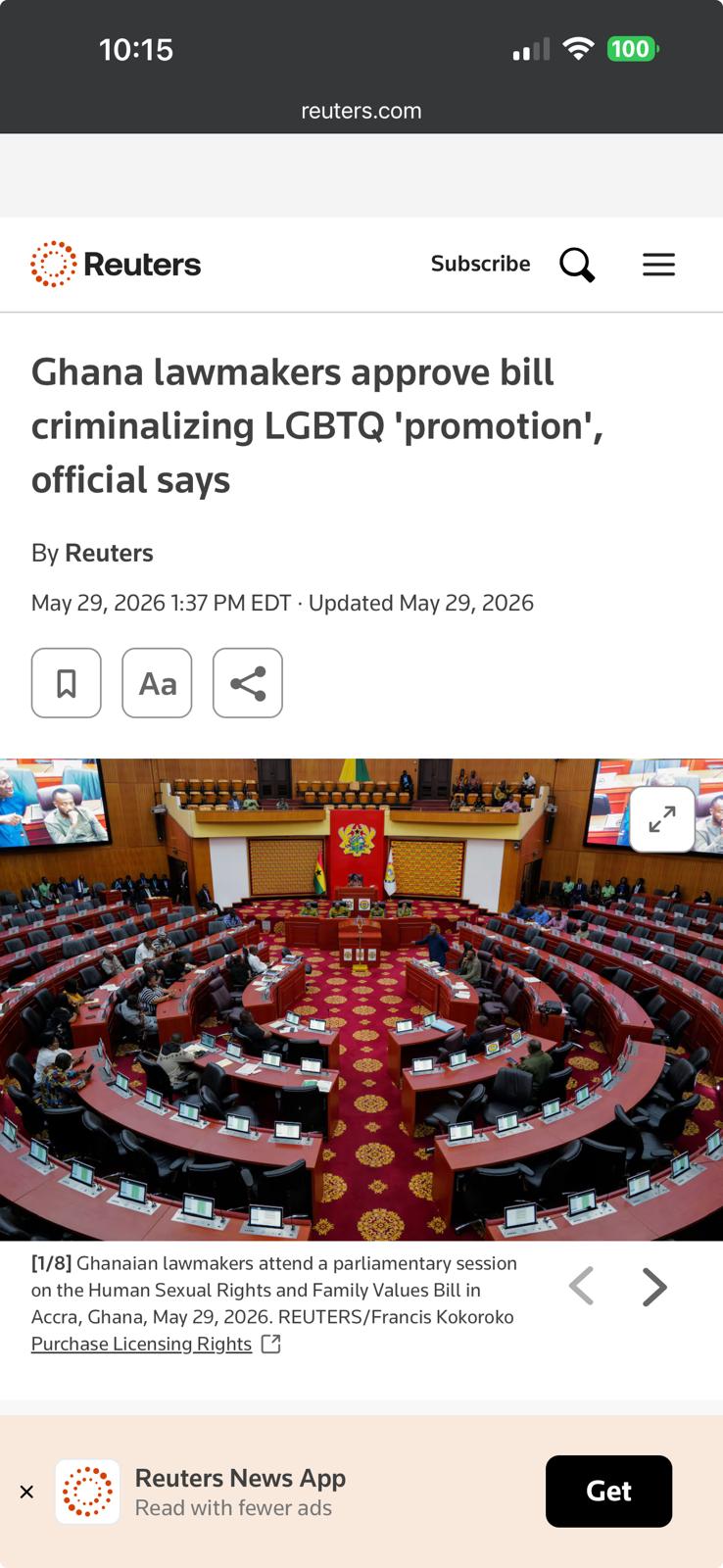
Today, Ghana's Parliament has passed a revised anti-LGBT+ bill, bringing it closer than ever to becoming law. Public scrutiny and international pressure have already helped delay this legislation once, and lawmakers reportedly made some changes, including limited protections for certain healthcare and legal professionals.

Even so, the bill would still allow prison sentences for people accused of same-sex relationships and for those who support or advocate for LGBT+ rights, while creating a duty to report prohibited LGBT+ acts to police or authorities, with violators facing up to three years imprisonment.

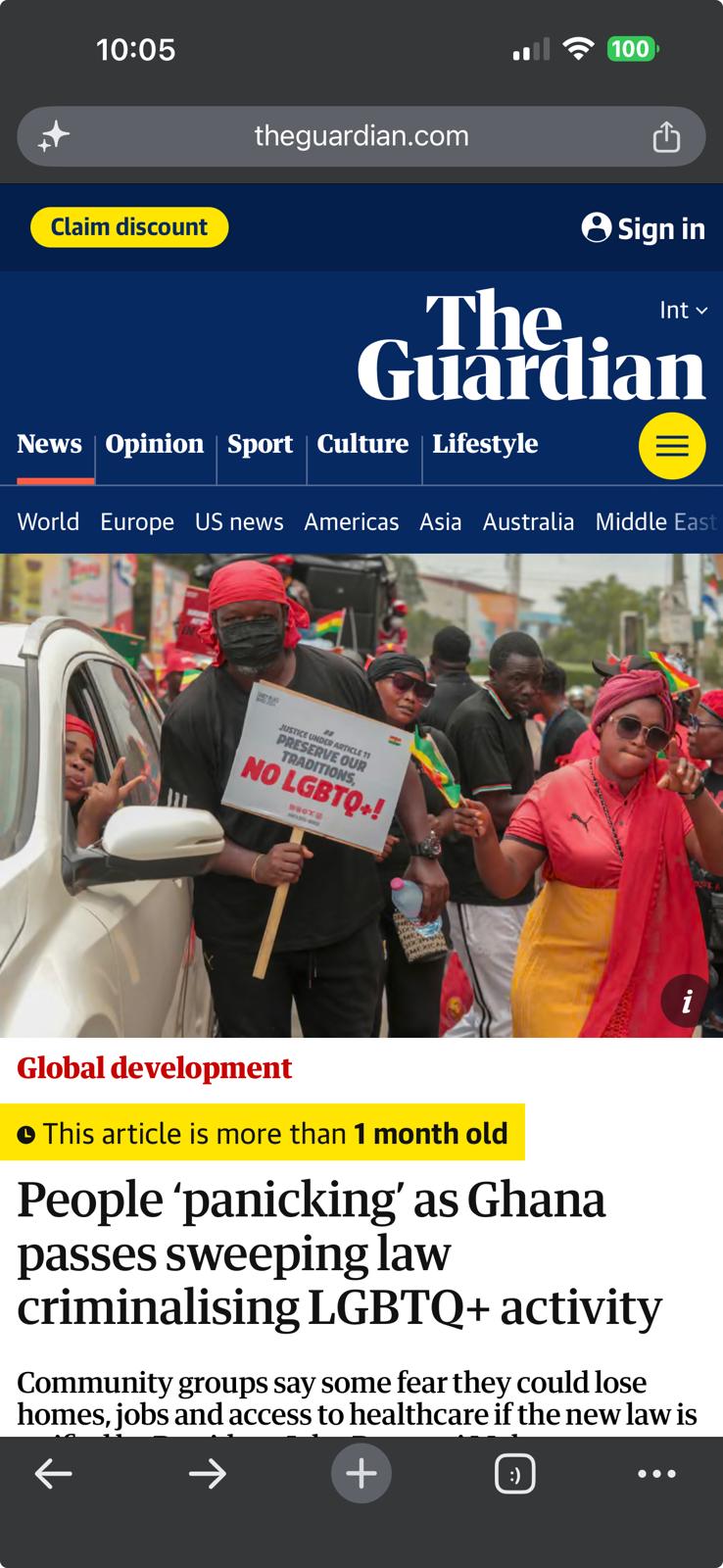
People in Ghana are already reporting growing fear of losing jobs, housing, healthcare, and family support as hostility increases. President John Mahama now faces a clear choice about whether Ghana will protect human rights or allow further punishment and fear.

Every signature and every act of public attention helps show that people around the world are watching and expecting leaders to uphold human rights for everyone.

We stopped it before. Sign now to protect LGBT+ rights and defeat it again!

In Ghana, a new dangerous anti-LGBT+ bill threatens basic human rights, safety, and freedom. Parliament is once again trying to push through the 'Human Sexual Rights and Family Values Bill' – a piece of legislation that would criminalize LGBT+ people and anyone who supports them. This is not the first time this bill has appeared: after an outpouring of international and local resistance last year, it was stopped. But now, with a newly elected President openly supporting harsher anti-LGBT+ laws and key politicians rushing the process, the risk of rapid approval has never been higher.

Severe Penalties Under the Bill

If this bill becomes law, it would mean jail sentences of up to three years for anyone merely suspected of being LGBT+. Citizens would be legally required to report individuals suspected of being LGBT+. Penalties include:

  • Up to 3 years in prison for identifying as LGBT+.
  • 5–10 years for promoting LGBT+ rights or offering support services.
  • Bans on gender-affirming care, sex toys, same-sex relationships, and LGBT-inclusive education.
  • Criminalization of allyship, funding, and advocacy in both physical and digital realms.

Over the past year, violence and discrimination against LGBT+ Ghanaians have surged, fuelled by hateful rhetoric from politicians and religious leaders. Many have already lost jobs, homes, and even family support – simply for being themselves.

In December 2024, Ghana's Supreme Court threw out challenges to the bill, claiming it was "too soon" – even as the threat grew. And with more support from the new President and key lawmakers, this time the bill could pass even faster, leaving LGBT+ people in Ghana at greater risk than ever before.

Ghana's leaders often claim to champion democracy. But democracy means protecting everyone's rights – not just those of a privileged few. When human rights are under attack, every Ghanaian suffers, and Ghana's standing in the world is damaged. The last time, a wave of global solidarity delayed the bill – proof that our voices matter. We defeated this bill once. We can do it again – but only if we act now, together.
Earlier Coverage — Sep 13, 2023
Updated — Sep 13, 2023 · Reuters May 29, 2025

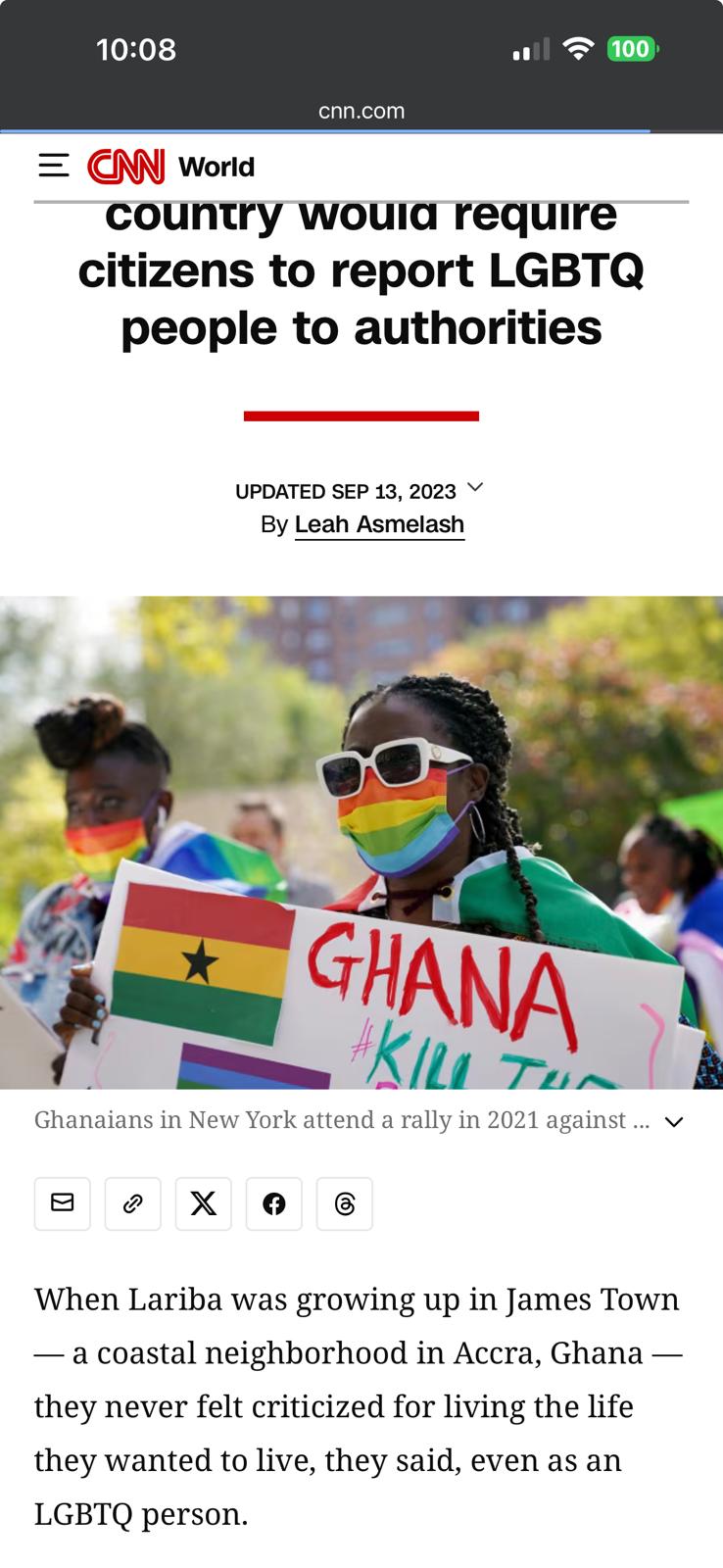
A proposed law would require citizens to report LGBTQ people to authorities — how Ghana got here

By Leah Asmelash · CNN

Breaking — May 29, 2025 (Reuters)

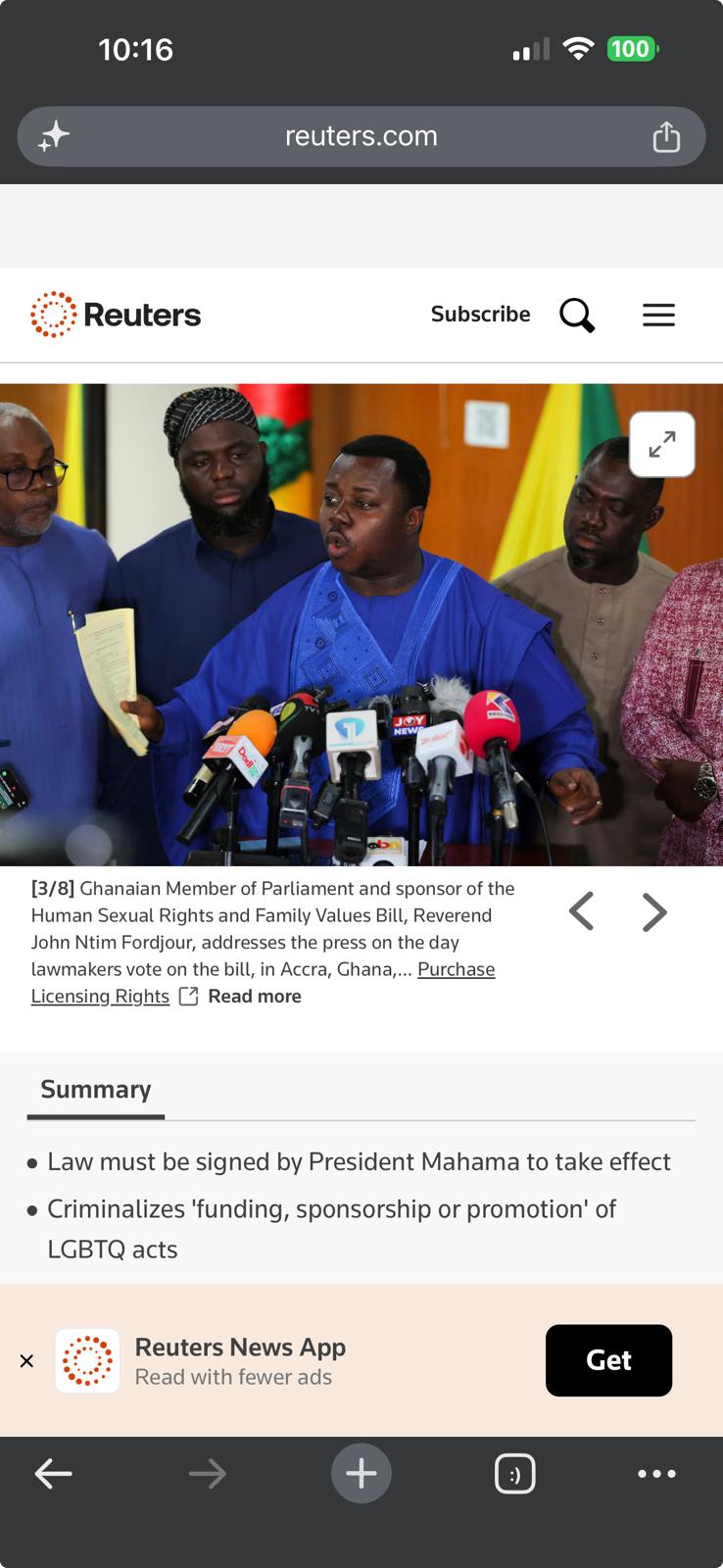
Ghana's parliament has approved the Human Sexual Rights and Family Values Bill, 2025 by a voice vote, after the Constitutional and Legal Affairs Committee unanimously recommended its adoption. The law now awaits the signature of President John Dramani Mahama to take effect. It criminalises the 'funding, sponsorship or promotion' of LGBTQ acts and requires Ghanaians to report LGBTQ acts to authorities.

When Lariba was growing up in James Town — a coastal neighbourhood in Accra, Ghana — they never felt criticised for living the life they wanted to live, even as an LGBTQ person. There were certain areas they couldn't go, but there were also places where anyone could be themselves. Now, all of that has changed.

"Now, everything is turned upside down," said Lariba — using a pseudonym for safety — the executive director of gender activist group One Love Sisters Ghana. "It's not safe anywhere." The shift, according to advocates, is largely due to the Promotion of Proper Human Sexual Rights and Ghanaian Family Values Bill, which not only criminalises LGBTQ relationships but also those who support LGBTQ rights — and could even extend to journalists for "promoting" these issues.

Though the bill had been in parliament since 2021, its final passage has stunned many. "All I see is disaster," said Ghanaian singer Angel Maxine, who is transgender. "If you live with a queer person, and the bill says you have the right to report them, then people will use it. And people who have done absolutely nothing wrong will be sent to prison."

Anti-LGBTQ content online was already gaining traction in Ghana in the years before the bill, and advocates report that online harassment, physical violence, and kidnappings have all increased. In April, four men were allegedly beaten in Kumasi because attackers thought they were gay. In June, a man was met by a mob after being lured through Facebook. In July, a man was reportedly stabbed because of his sexual orientation.

LGBTQ rights are now viewed as anti-African

Ghana isn't the only African nation to have seen such a shift. This summer, Uganda passed one of the world's harshest anti-gay laws, which includes punishing same-sex actions with life in jail. In nearby Kenya, politicians have proposed a bill that would further criminalise homosexuality. In Ethiopia, activists have reported an escalation in anti-LGBTQ sentiments, and police have cracked down on bars and hotels where same-sex activity is thought to occur.

According to many Ghanaian politicians and leaders supporting the bill, LGBTQ activities are anti-African and go against the country's cultural and religious values. When Western leaders lecture African nations about LGBTQ rights, it is often framed as neocolonialism.

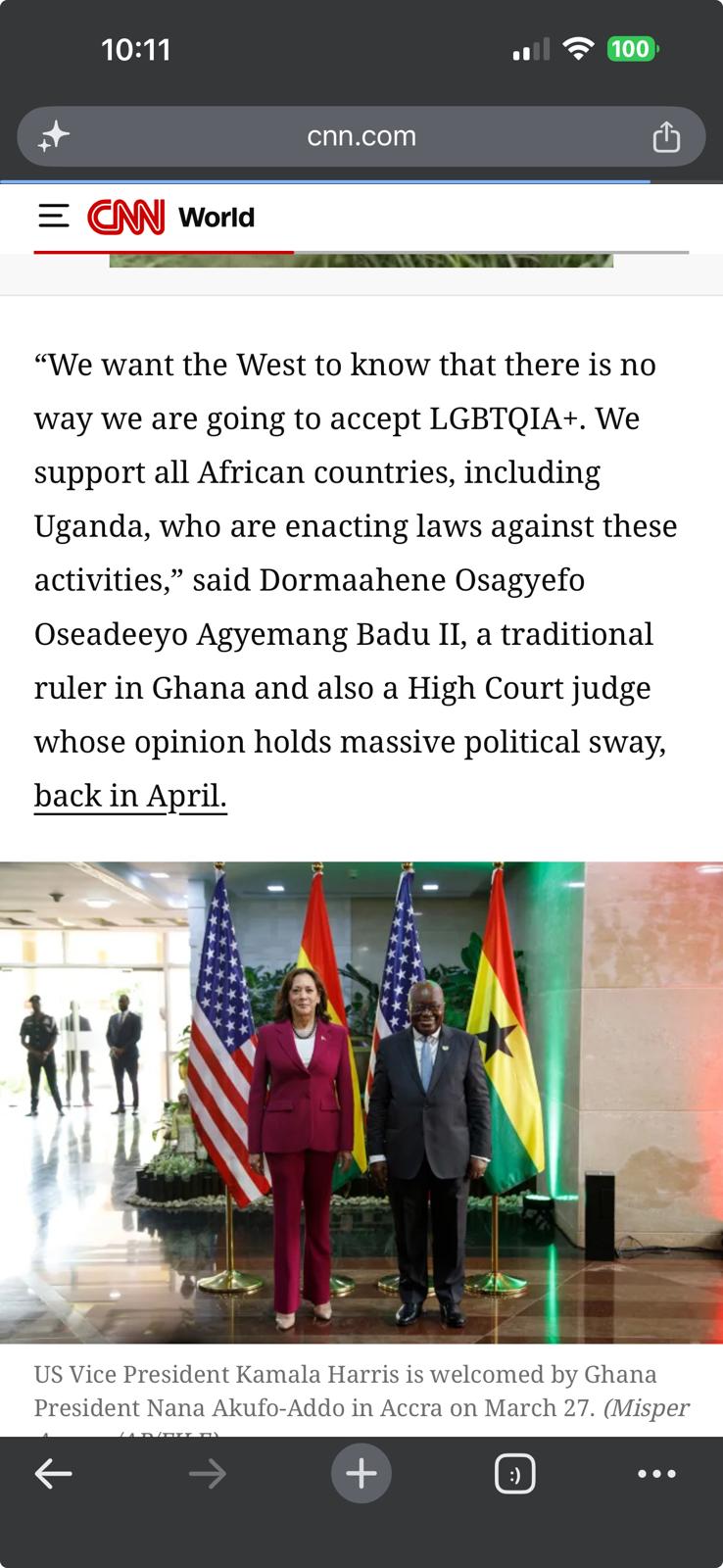
“We want the West to know that there is no way we are going to accept LGBTQIA+. We support all African countries, including Uganda, who are enacting laws against these activities.”

— Dormaahene Osagyefo Oseadeeyo Agyemang Badu II, Traditional Ruler & High Court Judge, Ghana

That comparison has had geopolitical implications — leading to growing sympathy in Ghana for countries like Russia, said Danny Bediako, director of LGBTQ rights group Rightify Ghana. "When it's about democracy, freedom of speech, press freedom, women's rights, we don't even look up to these countries," Bediako said. "But on LGBT they want us to look up those countries."

'Imported homophobia' & foreign influence

Despite what local leaders say, international investigations have pointed to foreign interests as the driver for anti-LGBTQ inclinations in Ghana. A US-based group called the World Congress of Families organised a 'family values' conference in Accra in 2019, which many proponents of the bill attended. Sam George, the MP who introduced the bill, traveled to Utah to attend the African Family Policy Conference, hosted by Family Watch International — a US-based group founded by a Mormon activist with anti-LGBTQ views.

This so-called 'imported homophobia' has stunned some Ghanaians. Audrey Gadzekpo, a professor at the University of Ghana whose expertise includes gender and media, said that before the bill, many people had a 'live and let live' mentality. "It is common knowledge, but we don't problematise it," she said. "Why is it that it was accepted, and all of a sudden it is criminal now?"

As the bill progresses, anti-LGBTQ violence continues

As of April, Rightify Ghana had recorded more than 30 cases of violence and discrimination against LGBTQ people in the country. In one case, a group of five people allegedly poured perfume straight into a man's eyes before beating him, then shared a video of the violence on WhatsApp demanding money for his release. Kidnappings have been on the rise since the bill's introduction, with some victims forced to strip naked on video and confess their sexuality.

"It scares me how people feel emboldened by this," Bediako said. Even if LGBTQ people want to report to police, the process can be an uphill battle — police can be reluctant to pursue the case, and may instead arrest the victim. LGBTQ centres and spaces previously accepting of queer people have closed their doors out of fear of repercussion.

“We know we are reaching community members, who can also share in other WhatsApp groups and privately with other individuals — just to help the awareness go far, so they can also be safe.”

— Danny Bediako, Director, Rightify Ghana

Out of necessity, LGBTQ people have tried to adapt. Through apps like WhatsApp and Telegram, community members warn others about attacks in their area. Bediako himself has joined over 50 WhatsApp groups, some with more than 200 members. Abdul-Wadud Mohammed, the communications director at LGBT+ Rights Ghana — currently studying in Nuremberg, Germany — still plans to return to Ghana. "I think most queer people in the diaspora are having these thoughts of trying to contribute to this fight," he said. "We can't leave it the way it is now."

There may be some hope. Engagement with LGBTQ-related online content skewed more positively after a controversial 2021 police raid on an LGBTQ centre in Accra — going from 19% positive before the raid to 35% positive afterward. "But it's likely to get worse," Mohammed said, "before it gets better."

Moments from the field

Communities in action

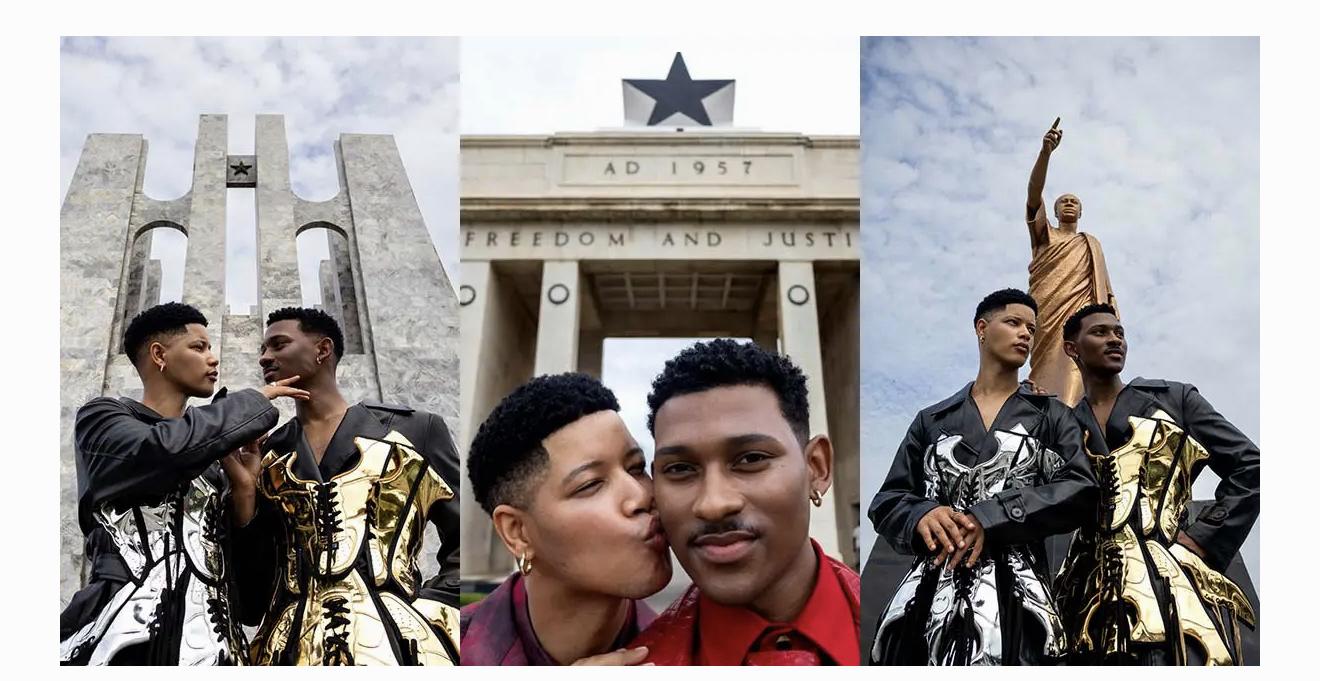
Two people embracing in a show of solidarity Solidarity in practice
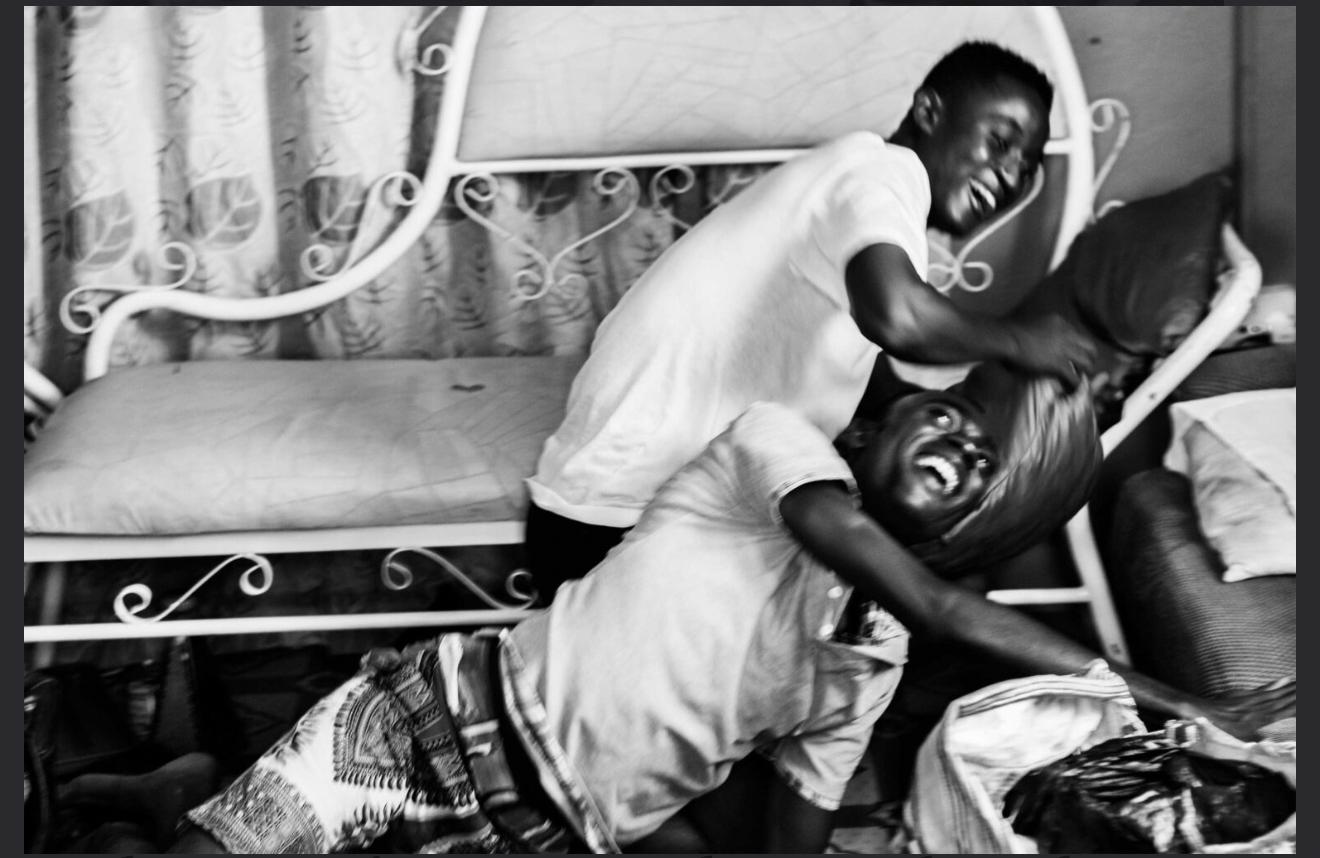
Community members gathered outdoors Community outreach day
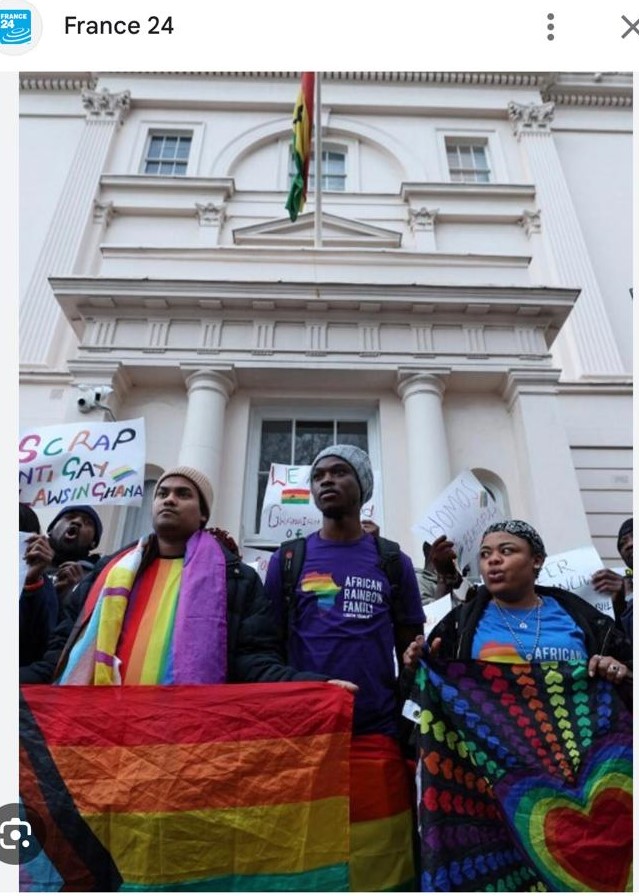
A civic dialogue workshop in session Civic dialogue workshop
Two people embracing in a show of solidarity Solidarity in practice
Community members gathered outdoors Community outreach day
A civic dialogue workshop in session Civic dialogue workshop
Our partners

Collaborating for systemic change and equal rights.

Stand with us

If you are experiencing abuse or discrimination, you can report it confidentially through our platform. You can also volunteer with us or request support — we are here to help.

Contact form

Send us a message

Get in touch
Address61 Sunny Meadow, Brampton, Ontario, L6R 1Y7, Canada
Phone+233 (26) 338-8689
website only — form submissions aren't sent anywhere yet.